5 Back-to-School Nutrition Tips to Support Your Child’s Immune System

The backpacks are packed, the lunchboxes are labelled and everyone has finally found a pair of indoor shoes that fits. And then, seemingly five minutes into the new school year, the first runny nose appears. Sound familiar?

This post is sponsored by Hiya. As always, all opinions are my own, and my recommendations are based on the evidence and my experience as a registered dietitian and mom of three.
Back-to-school season means new routines, busy schedules and plenty of shared germs. It is understandable to wonder how to support your child’s immune system for back to school, or whether a particular food, vitamin or wellness “hack” could help keep them from getting sick. Unfortunately, there is no magic solution. I certainly wish there were too!
Even consistently well-nourished kids get sick sometimes. That is a normal part of childhood, not a sign that you did something wrong or that their immune system is “weak.”
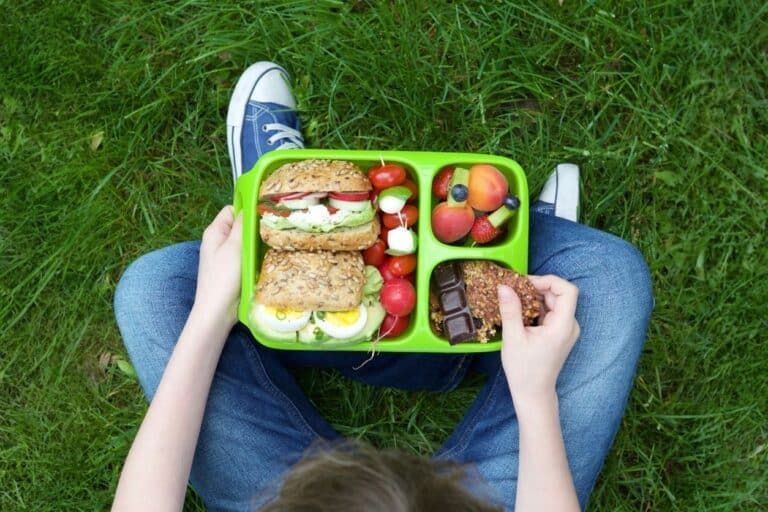
What we can do is provide regular meals and snacks and offer a variety of nutrients that support the body’s normal functions, including the immune system. And thankfully, that does not require expensive superfoods, elaborate recipes or a picture-perfect lunchbox.
Here are five of my realistic back-to-school nutrition tips to support your child’s immune health.
First…can food really “boost” your child’s immune system?
Before we get into the practical tips, let’s clear up one common misconception: there is no single food, nutrient or supplement that can magically “boost” your child’s immune system or prevent them from getting sick. Besides, “boosting” your immune system would not be a good thing even if it were possible!
The immune system is complex and works constantly to recognize and respond to potential threats. The goal is not to supercharge it. It is to provide the energy and nutrients your child’s body needs to function normally. So that’s why I prefer the word “support” over “boost”.
Certain nutrients (e.g. vitamins A, C and D and minerals such as zinc) play important roles in normal immune function. But eating more of one nutrient does not necessarily create a “stronger” immune system, particularly when a child is already getting enough.
I explain this in more detail in my article about what parents need to know about so-called immune-boosting foods for kids. For now, let’s focus on the everyday eating habits that help support your child’s overall nourishment.
1. Offer food regularly throughout the day
When school and activities start up again, family schedules can quickly become chaotic. And oh boy, can I relate to that with three kids in high-level sports and other activities.
Breakfast may happen in the car. A lunchbox might come home almost untouched. An after-school activity can push dinner later than usual, and some evenings everyone seems to be eating at a different time.
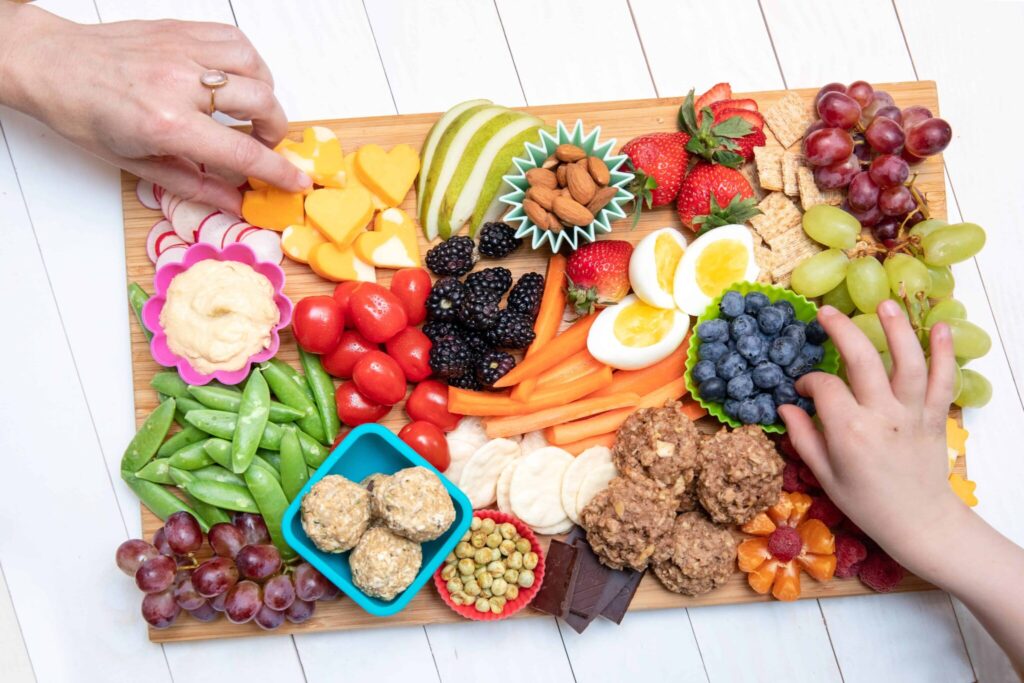
That is real life. One of the most helpful things you can do is provide reasonably predictable opportunities for your child to eat throughout the day.
Children have smaller stomachs than adults but high energy and nutrient needs to support growth, learning, movement and play. Most school-aged children do well with three meals and one to three snacks, although their appetite may vary significantly from one day to the next.
A nourishing school-day rhythm might include:
- Breakfast before school
- A morning snack, depending on the school schedule
- Lunch
- An after-school snack
- Dinner
- An evening snack when needed
This is not about following the clock rigidly or expecting your child to eat at every opportunity. It is about making food reliably available so they do not have to wait until they are completely depleted, exhausted or ravenous.
What if my child barely eats their school lunch?
This is incredibly common! School lunch periods can be short, noisy and highly distracting. Some kids would much rather talk or play than stop to eat. Others may feel overwhelmed by unfamiliar foods, difficult packaging or too much food packed into one container.
If this is an ongoing struggle, these seven ways to help your child eat more of their school lunch can make lunchtime feel a little more manageable.
Need fresh ideas for what to pack? You can also grab my free guide with 20 realistic school-lunch ideas for picky eaters.
A partially eaten lunchbox does not automatically mean your child is not getting enough nutrition. Look at their intake across the whole day rather than their eating based on one meal.
Try something simple and satisfying, such as:
- Cereal with milk
- Yogurt and fruit
- Cheese and crackers
- Toast with nut or seed butter
- A smoothie
- Leftovers
- A muffin and milk
- Hummus with pita or vegetables
An after-school snack can also provide an important opportunity to replenish some of the energy and nutrients they may have missed at lunch. For more inspiration, here are 15 nutritious after-school snacks your kids will love!
2. Aim for variety over perfection
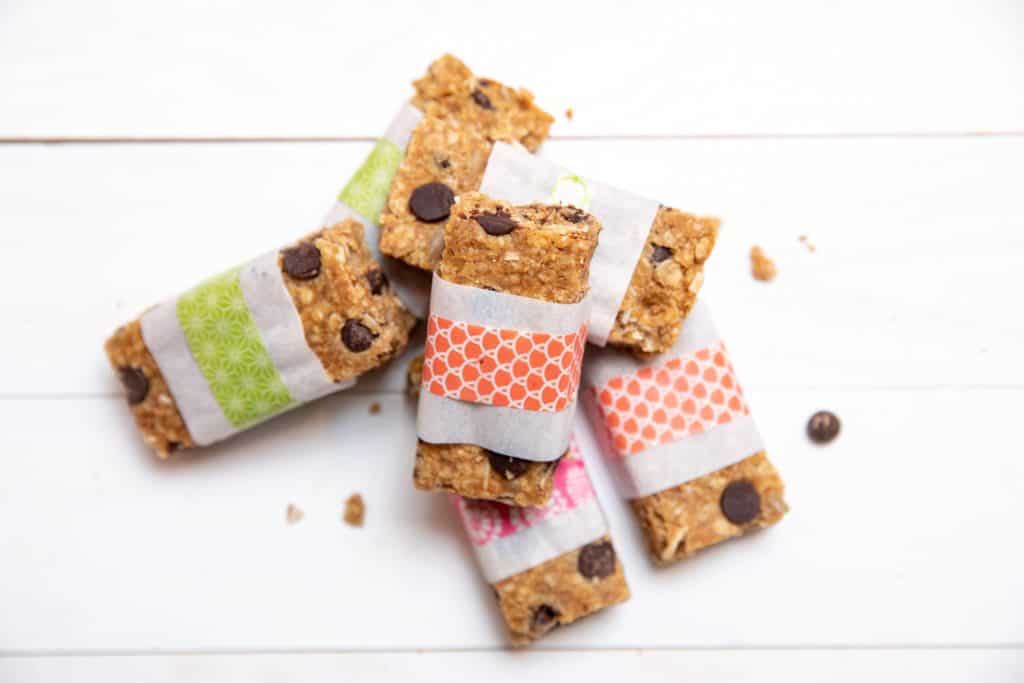
Parents often feel pressure to make every lunchbox perfectly balanced and colourful. But children do not need every nutrient (or every food group for that matter) at every meal. Their nutrition can balance out over the course of the day or week.
Your child might eat mostly crackers at Tuesday’s lunch and then have chicken, rice and fruit at dinner. They might ask for the same breakfast every day for two weeks and suddenly decide they never want to see it again. That, my friends, is very normal eating for a child.
Rather than trying to create perfect meals, continue offering different foods alongside familiar favourites. Variety builds through repeated, low-pressure exposure, not by convincing, bribing or requiring children to taste everything served.
Convenience foods count, too
And remember, “processed” does not automatically mean less nutritious. Processing simply describes the ways a food has been changed from its original form, and many nutritious foods are technically processed.
If that term tends to make you second-guess what you’re putting in your grocery cart, I explain more about what parents should know about processed foods for kids. I also share some of my favourite nutritious processed foods for kids that can make feeding a family a whole lot easier.
Need help navigating all the options at the grocery store? Here are my picks for the best yogurts for kids and the best boxed granola bars for kids.
3. Build nourishment with simple food combinations
As I mentioned, there are no magical foods that can prevent your child from getting sick or magically cure them. However, offering a mix of foods throughout the day can help provide the protein, vitamins, minerals, fats and carbohydrates their growing body needs to function normally, including their immune system.
It is also worth remembering that getting enough food overall matters. The immune system needs adequate energy and protein to do its job, alongside micronutrients such as iron, zinc, selenium and vitamins A, C, D, E and several B vitamins.
Deficiencies in these nutrients can interfere with normal immune function, but more is not necessarily better once a child is getting enough. That is why I would much rather see families focus on regular meals, enough food and variety over time than trying to load up on one particular “immune-supporting” nutrient.
What does this look like in real life?
You do not need to track individual nutrients or make every meal perfectly balanced. Instead, think about combining a few familiar foods whenever it is realistic.
When possible, include two or three of the following:
- A carbohydrate-rich food for readily available energy
- A protein food
- A source of fat
- A fruit or vegetable when available and accepted

That might look like crackers, cheese and grapes or it might look like a peanut butter sandwich eaten on the way to soccer.
Here are a few more quick examples:
Breakfast
- Cereal with milk and berries
- Toast with nut or seed butter and a banana
Lunch:
- A turkey and cheese sandwich with cucumber and fruit
- Hummus, pita, crackers and bell peppers
Snack:
- Yogurt with granola
- A muffin with milk
Dinner:
- Pasta with meatballs and tomato sauce
- Rice, tofu and frozen vegetables
These combinations provide different sources of protein, iron, zinc and vitamins A, C and D without requiring you or your child to think about nutrients at every bite.
Keep in mind that the combinations do not need to happen at every meal either. Your child might eat mostly crackers at lunch and then have yogurt, fruit and a sandwich after school. Look at their eating across the entire day or week rather than expecting one lunchbox to meet every nutritional need.
For a deeper look at the specific foods and nutrients involved in normal immune function, read my guide to what parents should know about “immune-boosting” foods for kids.
And when busy evenings leave you staring into the fridge wondering what on earth to make, my What’s for Dinner? 15 Meals in 15-ish Minutes e-book includes quick, flexible family meals for exactly those kinds of nights.
4. Support your child’s gut health
The digestive tract is home to trillions of microorganisms collectively known as the gut microbiome. Because the gut and immune system are closely connected, gut health often comes up in conversations about immune health.
The good news? Supporting your child’s gut does not require an elaborate protocol, expensive testing or convincing them to drink kombucha. Everyday foods can help.
For a more comprehensive explanation of the microbiome and digestive health, read my full guide on how to support your child’s gut health.
Offer fibre-containing foods
Fibre helps nourish beneficial bacteria living in the gut. Foods that contain fibre include:
- Fruits and vegetables
- Oats and other whole grains
- Beans and lentils
- Nuts and seeds
- Whole-grain cereals and breads
If they currently accept only a few fibre-containing foods, start there. Bananas, applesauce, oatmeal, cereal, crackers, corn, potatoes and berries all contribute.
Include fermented foods your child enjoys
Some fermented foods contain live microorganisms. Examples can include certain yogurts, kefir, sauerkraut, kimchi, miso and tempeh. Realistically, yogurt may be the most familiar and accepted option for many kids and that is completely fine.
That said, there is no need to push strongly flavoured fermented foods in the name of gut health. A child who does not eat yogurt or sauerkraut can still have a varied and nourishing diet. I promise!
Don’t forget fluids
Adequate fluid supports digestion and helps fibre do its job. Water and milk are both useful options, and soups, smoothies, fruits and vegetables also contribute fluid.

Where might a probiotic fit?
Probiotics contain live microorganisms that may provide specific health benefits when consumed in appropriate amounts.
The important thing to know is that probiotic benefits are strain-specific. Different strains may have different effects, so we cannot assume every probiotic works in the same way or that every child needs one.
The Hiya Kids Daily Probiotic is a once-daily chewable containing three probiotic strains and more than 10 billion live cultures. It comes in a refillable glass bottle and is recommended by the manufacturer for children ages two and older.
A probiotic may be worth discussing with your child’s physician or dietitian when there is a particular reason for considering one, such as certain digestive concerns or antibiotic use. Research in children continues to evolve, and choosing an appropriate strain and dose matters.
A probiotic is not something every child automatically needs during back-to-school season, nor is it a replacement for a varied diet.
5. Consider a kids chewable multivitamin
Food is the foundation of good nutrition, but that does not mean children need to eat perfectly or that supplements never have a place.
Most children get the majority of their nutrients through food over time, even when individual days look unpredictable. A supplement may, however, be useful when food variety has been significantly limited for a prolonged period, certain food groups are excluded or a child has individual nutrient needs that are difficult to meet through food alone.
This can matter because a true nutrient deficiency can affect normal immune function. The goal, though, is to correct or prevent a deficiency, not to give extra-high doses of nutrients in hopes of making the immune system “stronger.”

Where might a children’s multivitamin fit?
A multivitamin can sometimes serve as a practical nutritional “top-up.” It does not replace meals and snacks, nor can it guarantee that your child will avoid getting sick.
The Hiya Kids Daily Multivitamin is a once-daily chewable containing more than 15 vitamins and minerals, including vitamins A, C and D and zinc. It contains no added sugar or gummy additives and comes with a refillable glass bottle and stickers that kids can use to personalize it.
I appreciate that it is designed to be simple to incorporate into an existing routine. At the same time, not every child automatically needs a multivitamin, and the right product will depend on their age, diet and individual nutritional needs.
Think of a multivitamin as one possible tool, not insurance against colds, flu or partially eaten school lunches.
Before combining a multivitamin with separate vitamin D, iron, zinc or other nutrient supplements, check the labels carefully. It is possible to unintentionally double up on certain nutrients, so speak with your child’s physician, pharmacist or registered dietitian when you are unsure what is appropriate.
Also, if you’re comparing different supplement formats, you can also read my breakdown of gummy vitamins versus chewable vitamins for kids, including nutrient coverage, practicality and dental considerations.
Food is only one part of the bigger picture
As a dietitian, my focus is on helping families nourish their children in realistic and sustainable ways. Of course, food is only one part of supporting a child’s overall health.
Adequate sleep, enjoyable movement, handwashing, recommended vaccinations and appropriate medical care matter, too.
Nutrition cannot prevent every illness and it should never become another way for parents to blame themselves when their child gets sick. And when a stomach bug does inevitably make its way through the house, here is what and how to feed your child when they have a stomach bug.
The bottom line on supporting your child’s immune system through food
You do not need expensive superfoods or a picture-perfect lunchbox to support your child’s health during back-to-school season.
Focus on the foundations:
- Offer meals and snacks regularly.
- Make sure your child is getting enough food overall.
- Let variety build over time.
- Include different sources of protein, vitamins and minerals.
- Support gut health with fibre-rich and fermented foods your child accepts.
- Consider supplements thoughtfully when there is an appropriate reason.
I’ll leave you with this: the goal is not to create a child who never gets sick. It is to give their growing body reliable nourishment and give yourself a whole lot of grace along the way.

Sarah Remmer, RD, is a registered dietitian and mom of three, specializing in family and pediatric nutrition. She’s the founder of Centred Nutrition Collective and has nearly 20 years of experience helping families feel confident about feeding their kids.
This post may contain affiliate links. View our policy.