Are Gummy Vitamins Good for Kids? A Dietitian Mom Breaks Down Gummies vs. Chewables
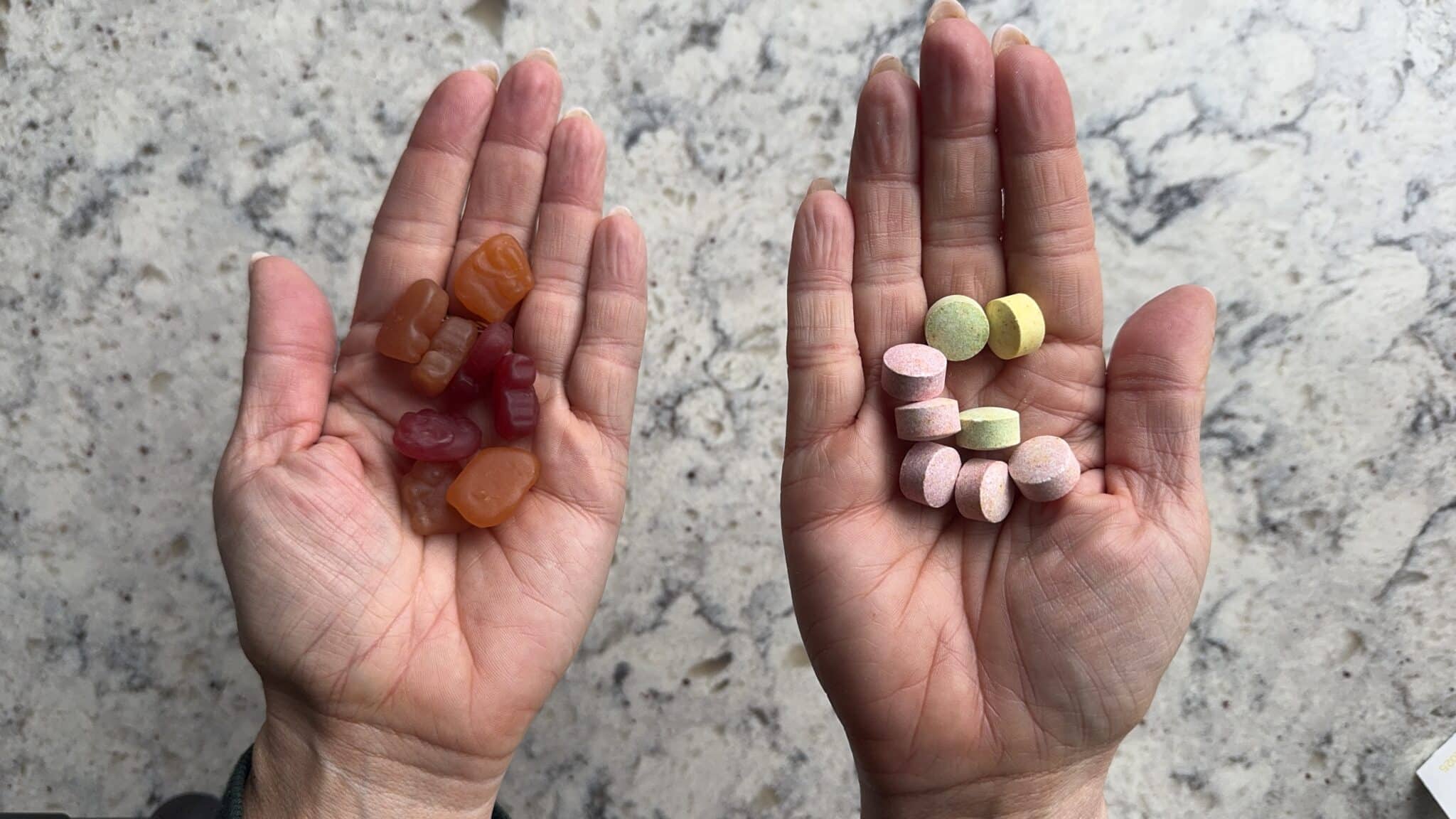
If you’re Googling “are gummy vitamins good for kids” while standing in the kids’ supplement aisle feeling totally overwhelmed and unsure of where to even start, you’re not alone. The rows and rows of rainbow gummies, chewables, and tinctures in front of you, it can feel really confusing, especially given the conflicting messages and misinformation about kids’ nutrition online.
As a registered dietitian and mom of three, this is one of the most common questions I hear from parents: Do kids actually need a multivitamin? And if they do…are gummies okay, or are chewable vitamins better?
In this post, I’ll break down gummies vs. chewables in a simple, practical way covering what matters most for dental health, the nutrients of concern many parents worry about (like vitamin D and iron), and a realistic checklist to help you choose wisely for your child’s age, diet pattern, and stage.

The short answer? Gummy vitamins can be fine. But they’re not my first choice and I’ll explain exactly why (without guilt, pressure, or perfection). Let’s break it down step-by-step.
This post is sponsored by Hiya. As always, all opinions are my own, and recommendations are based on evidence and my clinical experience as a registered dietitian and mom of three.
Do Kids Need Multivitamins?
First things first: most kids can meet their nutrient needs through food, with one exception (Vitamin D – we’ll talk about this shortly!).
Our bodies are designed to work with the nutrients found in whole foods and when a child’s intake balances out over the course of a week (which is typical of most kids), even during “picky eating” phases, most children still meet their needs over time.
That said, supplements can absolutely play a helpful role in certain situations, including:
- Selective eating phases that significantly limit variety
- Rapid growth (especially adolescence)
- Limited diets (vegan, dairy-free, no fish)
- Busy seasons where food variety feels harder
- Specific nutrient gaps identified by a provider
If you want a deeper dive into whether kids actually need vitamins or supplements, I break it down in my full guide to vitamins for kids. The goal isn’t to replace food; it’s to fill small gaps when needed and “top up” what kids are getting.
What’s in Kids’ Gummy Vitamins?
Vitamin labels can feel confusing, so let’s simplify. Most kids’ multivitamins, whether gummy or chewable, contain core vitamins like A, C, D, E, and B vitamins that support growth and development.
But here’s where it gets interesting. Minerals, like iron, zinc, and iodine, are often missing from gummies. Why? Minerals are harder to stabilize in gummy form and often affect taste and texture.
Forms and doses also vary widely between brands. Some require kids to take multiple gummies per day to reach adequate amounts, and others include very small amounts of nutrients that don’t meaningfully contribute to daily needs.

What’s in Kids’ Chewable Vitamins?
Most kids’ chewable multivitamins (the tablet kind you chew, not gummies) include many of the same “usual suspects” you’ll see in gummy vitamins (see list of vitamins above).
But here’s the big difference: chewables can often include minerals more reliably than gummies…things like zinc, iodine, and sometimes iron, because tablets don’t require a sugar-based gummy structure. These minerals are often left out of gummies due to stability and taste challenges.
Why This Dietitian Mom Prefers Chewables Over Gummies
As a pediatric dietitian (and mom), here are a few reasons why I choose chewables over gummies for my own kids:
Less sugar (and less “candy-like” stickiness):
Gummies behave a lot like gummy candy. They’re sticky, more acidic, can cling to teeth, and that “hang around” factor isn’t ideal for dental health. Chewables are typically less sticky, and many are made with little to no added sugar (for example, Hiya is sweetened with zero added sugar). Any supplement that tastes good enough for kids to ask for “more” deserves the same storage rules as medicine, out of reach.
More room for nutrients
Chewable tablets can usually fit a broader mix of vitamins and minerals because they don’t need a gelatin/sugar “gummy base.” That matters because gummies often leave out certain minerals (or keep them very low) since minerals like iron and zinc can be harder to make stable and pleasant-tasting in gummy form. Translation: chewables can sometimes do a better job of actually “covering gaps,” depending on the brand and formula.
Often only one-a-day vs. several
Many chewables are designed to be one tablet daily, which makes the routine simpler (and reduces the “take 2–5 gummies a day” situation).
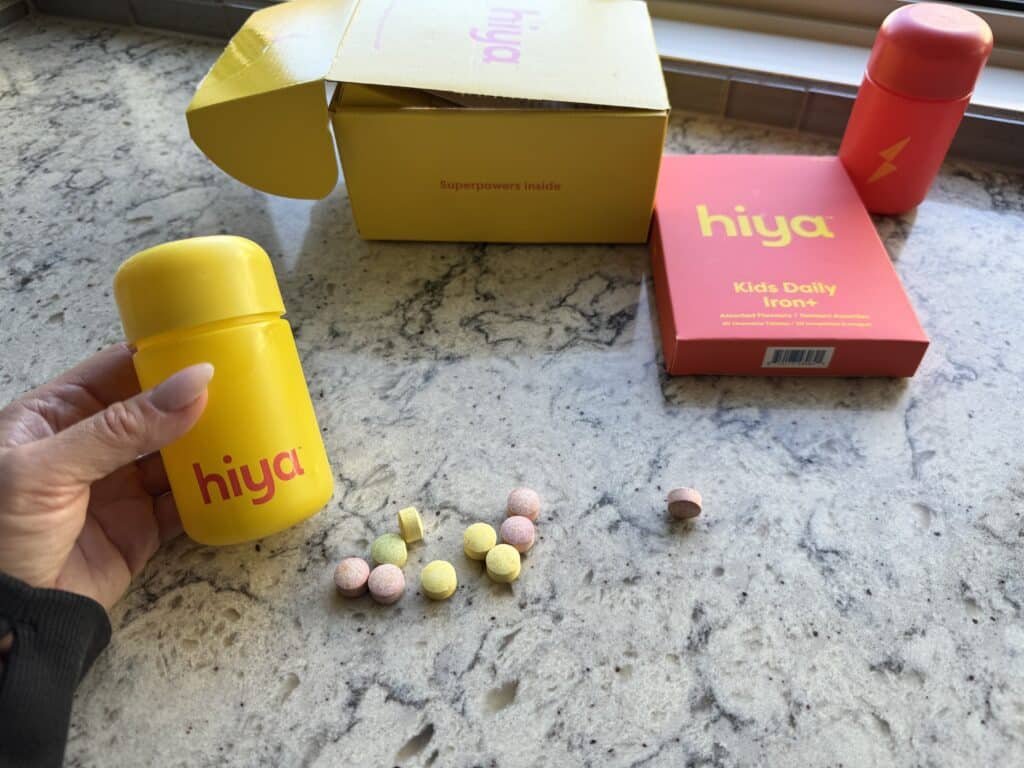
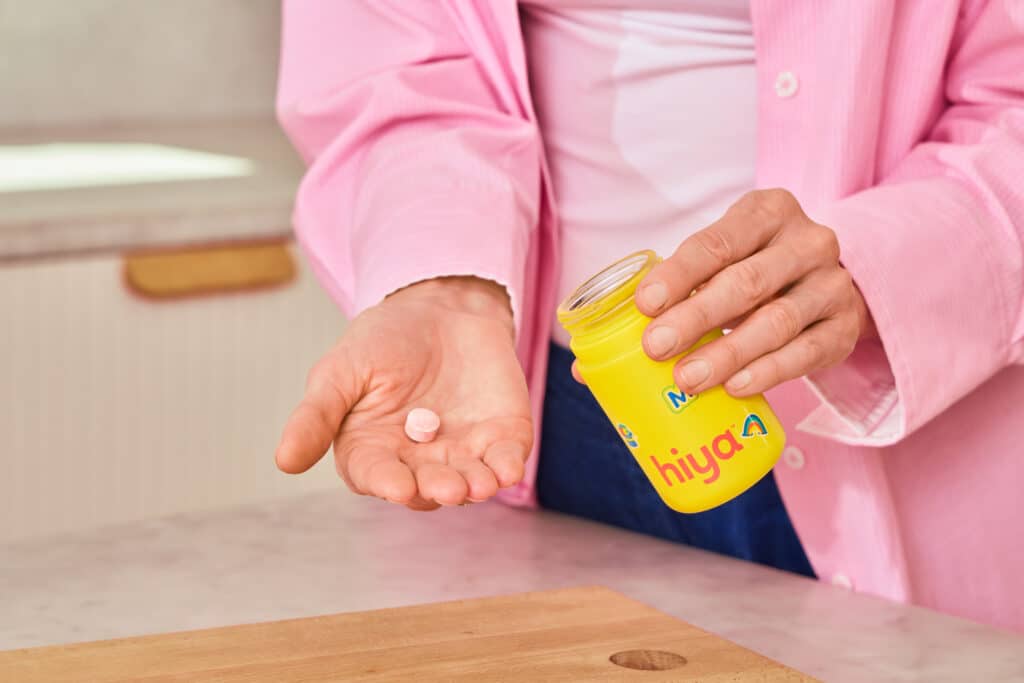
Hiya, for example, is specifically formulated as one daily chewable. This means fewer pieces to remember, fewer negotiations, and usually fewer chances a kid will think vitamins are a free-for-all snack.
Longer and more stable shelf-life
Gummies tend to have a shorter shelf life than other forms of vitamins, because they’re more like a “food-style” product and can degrade over time. The longer gummy vitamins sit around, the more their nutrients can break down. Chewables, on the other hand, are more shelf-stable and don’t degrade as quickly.

Bonus: Sustainable Packaging!
Most kids’ vitamin supplements come in big plastic bottles that get tossed every month (and honestly, sometimes sit in the cupboard long enough to get forgotten).
Hiya uses a beautiful refillable glass bottle (that kids can personalize with stickers!!) and then sends monthly refills in a small recyclable pouch instead of another full bottle, which cuts down on packaging waste and helps keep the routine consistent.
A quick Canada-specific note (because this matters!)
In Canada, vitamins for kids are typically regulated as Natural Health Products. I always recommend looking for an NPN (Natural Product Number) on the label, which means the product has been licensed by Health Canada for safety, quality, and effectiveness when used as directed. You can also look it up in Health Canada’s NPN database if you want extra peace of mind.
Gummy vs. Chewable Vitamins: A Quick Comparison
If you’re deciding between gummies and chewables, here’s a quick side-by-side to help you compare:
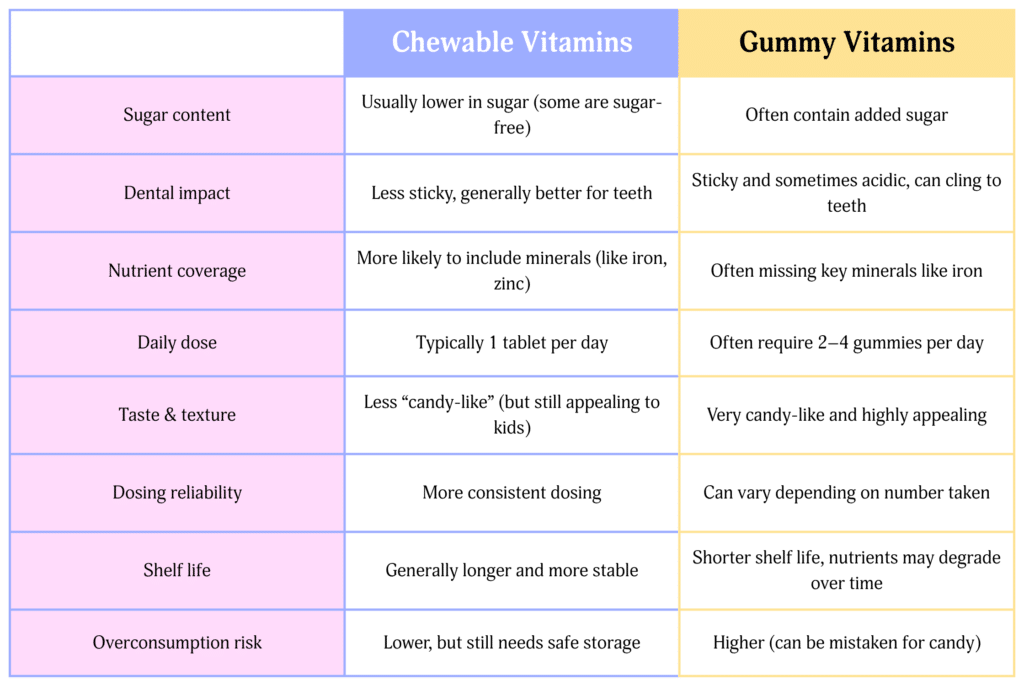
To be clear, this isn’t about shaming gummies. It’s about understanding the trade-offs.
Dental Health Considerations with Gummies
If you’re using gummies:
- Give them with meals
- Avoid sour or highly acidic versions
- Rinse with water afterward
- Don’t give right before bed
- Loop in your dentist if your child is high risk for cavities
Small adjustments can make a meaningful difference!
Nutrients That Influence the Gummy vs. Chewable Decision
When I’m helping families decide between gummies and chewables, a few nutrients often guide the conversation.
Vitamin D:
Vitamin D is one of the most common gaps I see in practice. Most kids require vitamin D supplementation regardless of whether they take a multivitamin. Hiya’s multivitamin contains vitamin D, which is really nice because you don’t have to worry about finding a separate supplement!
Iron:
This is where form really matters. Most gummy vitamins do not contain iron, and many chewables don’t either. If your child is in a higher-need group (like toddlers, teen girls, picky eaters, or kids who don’t eat meat), you may need a separate iron supplement. Hiya offers a separate iron supplement designed for kids who need additional support. Always confirm dosing with your healthcare provider.
B12, Iodine, and Zinc:
These can be important considerations in vegetarian, vegan, or dairy-free diets. Chewable tablets are more likely than gummies to include these minerals in meaningful amounts.
The takeaway? The “best” form depends on which nutrients your child may actually need support with.
When Gummy Vitamins Can Still Make Sense
If you know me, you know I’m all about nuance. Even though I often prefer chewables for a bunch of practical reasons, gummy vitamins can still be a good fit for some kids, especially if they’re the only form your child will reliably take.
That might be the case for:
- Kids with sensory sensitivities who truly can’t tolerate the taste or texture of chewable tablets
- Kids who gag on chewables or find them chalky or too dry
- Children who consistently refuse other forms, no matter how many brands you try
- Families in a season of survival mode where something is better than nothing
How to Choose a Kids’ Vitamin (A Quick Checklist)
If you’re deciding between gummies and chewables, here’s what I recommend looking for:
- Match it to your child’s specific needs
- Make sure iron is included if iron is needed
- Look for third-party testing (or an NPN in Canada)
- Aim for minimal added sugar
- Avoid sticky or sour coatings
- Confirm age-appropriate dosing
- Choose child-resistant packaging and store out of reach
The “best” vitamin isn’t the trendiest one; it’s the one that safely fits your child’s real needs. For families who prefer a chewable, Hiya checks many of these boxes! It’s non-sticky, contains zero added sugar (sweetened with monk fruit and mannitol), includes key minerals, is third-party tested, and uses refillable packaging. It aligns well with the criteria I personally look for as both a dietitian and a mom.

Bottom Line
Are gummy vitamins good for kids? They can be, but they’re not always the most complete or practical option.
Because gummies are sticky, often require multiple pieces per day, and frequently leave out key minerals like iron, they don’t always offer the same nutrient coverage or dental advantages as chewable tablets. That’s why, in most cases, I lean toward chewables.
That said, vitamins only work if your child will actually take them. For some kids, gummies are the only realistic option, and that’s totally okay. This isn’t about being anti-gummy. It’s choosing a form that safely fits your child’s needs, supports nutrient gaps, and works within your family’s routine.

Sarah Remmer, RD, is a registered dietitian and mom of three, specializing in family and pediatric nutrition. She’s the founder of Centred Nutrition Collective and has nearly 20 years of experience helping families feel confident about feeding their kids.
This post may contain affiliate links. View our policy.