Strategies for Handling Holiday Treats with Kids (A Dietitian Mom’s Guide)

Do you feel like holiday treats are everywhere (class parties, cookie swaps, Grandma’s famous fudge)?! Well, you’re not alone. As soon as December hits, the festive treats seem to flow. It’s normal to wonder how to handle all the sugar without constant “no’s,” strict rules, or power struggles.

As a registered dietitian and mom of three, here’s the biggest reframe I want you to hear: a treat-heavy season won’t derail your child’s health. In fact, it can be a really great opportunity to learn. What matters most is how we talk about and structure sweets…calmly, consistently, and without shame.
A quick real-life example: At a cousin’s cookie exchange, one of my kids proudly piled their plate with three kinds of bars and a cupcake. My instinct was to say, “That’s a lot,” but instead I stayed curious: “Nice picks! Want to sit and enjoy those together?” Halfway through, they leaned over and whispered, “My tummy’s getting full.” We wrapped the rest to take home…and they forgot about it.
Moments like this remind me how much kids learn when they’re trusted to tune into their own bodies, even (and especially) around holiday sweets.
In this guide, you’ll find simple, realistic strategies (plus word-for-word scripts) to help your kids enjoy holiday treats without battles, bribery, or guilt. Let’s make treats feel joyful, not stressful.

Get Support That Makes Mealtimes Easier
Struggling with picky eating, mealtime battles, or other food or body image worries? Our team of registered dietitians at Centred Nutrition Collective offers virtual family nutrition counselling across Canada. We’ll help you feel more confident and supported with feeding — and many plans are covered by benefits.
Zooming Out: The Big-Picture Mindset on Holiday Sugar
The holiday season is a tiny slice of the year. Yes, there are pockets of time when cookies, hot cocoa, and candy canes seem to be the main food groups. That’s okay.
Kids’ bodies and their relationship with food are shaped by patterns over months and years, not a couple of treat-filled weeks. What tends to cause the most drama isn’t the sweets themselves; it’s restriction and fear-based messaging.
When children feel like treats are scarce or tightly controlled, their interest in them naturally grows. And then grows more. They’re more likely to overdo it when they finally get access, sneak treats, or obsess over the dessert table. When treats are offered predictably and without shame, kids can relax and tune into appetite, taste, and comfort. Are there mistakes made along the way? Absolutely. But that’s how kids learn! We need to give them those opportunities so that they build skills. For a deeper dive into this idea, I break it down here: 5 steps to helping kids eat treats mindfully and in moderation.
For younger kids, I lean on the Division of Responsibility in feeding, even during holidays, but with flexibility of course. Grown-ups decide the what/when/where of eating; kids decide if and how much. It’s the simplest way to reduce power struggles and help kids build body trust. And yes, it works at Grandma’s house, the office potluck, and the arena snack bar.
Before the Season Starts: Set Yourself (and Your Kids) Up for Success
A little planning upfront can transform the whole month from “sugar panic” to “we’ve got this.”
Mind your language (and your tone)
Words shape the way kids think about food and themselves. I recommend sticking with food-neutral language: candy is just…“candy”. Not “junk”, “sometimes food,” or “bad.” Simply, just call it by its name: cookie, fudge, hot chocolate. No labels needed!
Neutral phrases keep the focus on how food feels and tastes, instead of attaching moral value to it. If this idea is new, this explainer is a great starting point: What is food neutrality—and why is it important for your child?
A few helpful phrases:
- “Would you like some hot chocolate with your afterschool snack?”
- “Cookies aren’t in the plan right now, but let’s enjoy one with dinner tonight!”
- “I love chocolate bark too – what are your favourite toppings?”

Clarify your values around sweets
Before the season ramps up, it helps to pause and ask: What do I actually care about most here? When you’re clear on your values, decisions at parties, grandparents’ houses, or the arena snack bar feel less reactive and more grounded.
For some families, the priority is connection—being part of traditions, celebrating cultural foods, and saying yes to Grandma’s specialty. For others, it’s making sure kids don’t feel restricted the way we did growing up. And for some, safety (like managing food allergies) naturally comes first.
There’s no single “right” approach; it’s about your family’s values. If you’re open to a more relaxed, trust-based approach to treats, this post will give you lots to work with.
These foods may not be as nutrient-dense, but they offer other benefits: joy, connection, tradition, and memories. Health is multifaceted, and nutrition is just one part of it. It’s okay to say no—just check whether your “no” comes from logistics and balance (for example, “we need room for other foods today”) or from fear and diet culture.
Here are a few simple ways to put your values into words:
- “We’re keeping meals and snacks predictable this week and adding a few desserts where it makes sense.”
- “These foods are part of our traditions, and we enjoy them together.”
- “I love cookies too — we also make room for other foods so our bodies feel good.”
When you know what matters most, you can set boundaries that feel consistent and comforting for you and your child.
Decide (loosely!) how you’ll manage and handle sweets
The key to helping kids feel calm around sweets is offering them regularly enough that they feel like “just another food.” When treats are tightly controlled or rare, kids naturally fixate on them. Predictable, low-pressure exposure does the opposite—it helps them relax.
Rather than creating a strict holiday treat schedule, think of it more like a loose outline that reduces decision fatigue. For example, you might plan for hot chocolate at the community skate, dessert served with dinner at a potluck, or a cookie with an afternoon snack on a quieter day.
Keeping things flexible is important, especially during the holidays. If you know there’s a big family event in the evening, you might go lighter on sweets earlier in the day. If there’s nothing special happening, you might offer a candy cane from the tree or add a couple of holiday cookies to the afternoon snack—no big announcement needed. When kids know treats show up regularly, they don’t need to chase or negotiate for them.
Here are a few simple, calm scripts you can use:
- “Dessert is part of dinner tonight.”
- “There’s hot chocolate at the rink—we’ll enjoy some there.”
- “We’ll see what’s at the party and each choose a couple of favourites.”
This kind of gentle predictability builds trust, keeps treats off the pedestal, and makes holiday decisions feel more grounded for everyone.
Chat with your kids ahead of time
A quick, matter-of-fact conversation can take a lot of the mystery and anticipation out of holiday treats. For younger kids, you can share a loose plan if you know it, and reassure them there will always be other chances to enjoy sweets—even if you’re not sure what’s being served. For older kids, a simple reminder to listen to their bodies goes a long way. Here are some easy scripts:
Younger kids (I like to do this on the drive to an event or while pulling on boots.)
- “We’ll have a snack before we go. At the party, there will be lots of choices. You can eat what and how much you want from what’s offered.”
- “I’m not sure what dessert will be today, but you’ll always get another chance to enjoy treats at home too.”
Older kids:
- “There will be desserts out most of the afternoon—listen to your tummy and choose the ones that look yummiest to you.”
- “Try what you’re excited about, and remember you don’t have to finish anything you’re not loving.”
Align with co-parents and caregivers
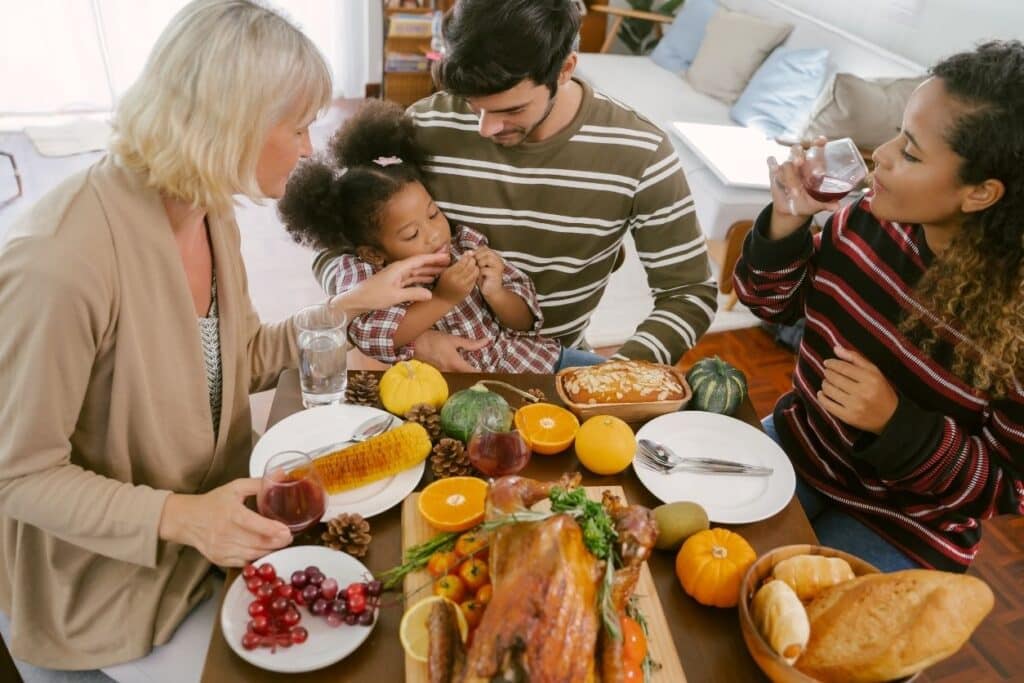
Oof, this is a toughie! Mixed messages are stressful for kids and for us. A two-minute check-in with the other adults—before the chaos—can make the whole day smoother. Share the plan in plain language: when you’re offering dessert, whether sweets will be served with meals, and how you’ll respond if kids ask for more right away. If grandparents love to offer treats, give them a simple job they’ll enjoy—“Would you be in charge of pouring cocoa when we sit down for snack?”
If you’re coordinating across homes, predictability matters even more. You don’t have to match plans perfectly, but agreeing on a basic rhythm helps kids stop worrying about when treats will show up next.
Scripts (adult-to-adult):
- “Our plan today is dessert with dinner. If they ask earlier, I’ll remind them it’s coming.”
- “We’re keeping language neutral. If they’ve had enough for now, I’ll say we’re taking a break and offer water.”
- “Could you help by setting out the dessert plates when we sit down?”
Quick tips:
- Text a one-line plan before the event.
- Offer a role to the treat-loving relative so they’re part of the structure.
- If something goes sideways, debrief later, not in front of kids.
If you’d like to dive deeper, check out my post on mealtime strategies for blended families.
At Holiday Gatherings: How to Handle Dessert Without Battles
Holiday events often come with endless tables of cookies, squares, and treats—and that can feel overwhelming for kids and parents. The goal here isn’t to control every bite, but to give just enough structure that kids feel supported, not micromanaged.
1. Fuel first (skip the “save room” approach)
Arriving overly hungry makes everything feel more urgent for kids. Offer a simple snack with carbs and protein (and a bit of fat) an hour or two beforehand—Greek yogurt parfait and berries, cheese and crackers, a peanut butter and banana sandwich, whatever’s easy. This helps stabilize blood sugars and reduces the frantic “I need all the desserts now” energy.
2. Let your kids enjoy the desserts (yes, even if it’s mostly what they choose)
Holiday events happen a handful of times a year, and they don’t undo the variety and balance you offer at home. Allowing kids to enjoy what’s there—without commentary—gives them the chance to practice tuning into appetite, comfort, and fullness.
If they’re going hard on desserts, it may be a sign they feel restricted around these foods at home. (No judgment—we’ve all been there!) This is great information for after the holidays, when you can work on offering sweets more regularly and neutrally.
If you need to set a gentle boundary after they’ve had some freedom, try:
- “We’re going to take a break from desserts. If you’re still hungry, let’s check out the other foods or go play.”
- “We need to leave enough for everyone. If you’re hungry, there’s more food on the other table.”
The key is the intention behind the boundary—support, not shame.
3. If kids overdo it or feel sick: respond with curiosity, not criticism
Tummy aches happen. Adults overdo it sometimes, too. These moments are part of building self-regulation.
Supportive scripts help kids connect dots without guilt:
- “Sounds like your tummy is really full. Would water or a little break help?”
- “What part did you enjoy most? Next time, we can start with that and see how it feels.”
Quick reminders:
- Skip “I told you so.”
- Normalize the experience.
- Keep it about comfort, not judgment.
Stockings, Classroom Parties & Big Candy Hauls (Trust and Autonomy)
After a holiday party or stocking dump-out, kids love spreading everything out and admiring their stash. This moment is a great opportunity to build trust—not to tighten control. When kids feel ownership and predictability around their candy, the urgency to “get it all in now” drops dramatically.
Older kids (+ teens): more autonomy, simple boundaries
I treat the stash as theirs to manage, with a few clear expectations. A simple guideline might sound like:
- “This is your stash to manage. Just give me a heads-up before you take from it, enjoy it at the table, and keep it alongside meals and snacks so there’s room for everything your body needs.”
Then I follow through—no micromanaging or tallying. A quick “How’s the stash going?” check-in is usually enough. It’s amazing how quickly most kids rise to the responsibility when they know they’re trusted.
Younger kids: autonomy with gentle scaffolding
Younger kids benefit from more structure; predictability helps them feel safe. You might:
- Choose a favourite-treat container together
- Decide where it lives
- Offer from it at snack or with dinner
This helps them learn that the candy isn’t disappearing, which makes it easier to pause, save, and move on.
Family agreements that help (choose 1–3):
- The stash lives in a known spot; kids let a grown-up know before taking from it.
- Sweets are enjoyed sitting at the table (or a designated spot).
- If someone feels too full, we pause and learn—no shame.
- Teeth get brushed before bed.
- Sharing/trading is optional and only happens when both kids agree.
Quick scripts you can tweak
- Older kids: “Totally cool that you manage your own stash. I just ask that you give me a heads-up before you take from it and respect the boundaries I set. My job is to make sure there’s room for all kinds of foods across the day.”
- Younger kids: “These treats are yours. We’ll keep favourites in your container, and I’ll offer from them with snack or dessert so there’s room for other foods too.”
- When asked for more right after eating: “We’re taking a break for now. You’ll see it again at snack.”
- If sneaking pops up: “No need to hide or sneak – these foods are allowed! Just let me know that you’re craving it, and we can plan to enjoy it. And if you feel like you don’t get enough access, let’s talk about that too! We can always adjust!
For more ideas on setting a predictable rhythm without over-controlling, this companion post is helpful: Kids and treats: how to manage them as parents.

Building Body Trust Around Holiday Sweets (Even If Your Child Seems Treat-Obsessed)
Kids learn how to listen to hunger, fullness, and comfort over time and holidays give them lots of chances to practice. When sweets show up regularly and without pressure, kids feel calmer and are better able to tune into their bodies. When sweets feel scarce or tightly controlled, the opposite tends to happen: fixation, sneaking, and “all-or-nothing” behaviour.
1. Use simple body-awareness language (no lectures needed)
Short, neutral prompts help kids notice how food feels without turning it into a lesson.
A few favourites:
- “Is your tummy feeling hungry, comfy, or too full?”
- “Are you still enjoying the taste, or is your body saying you’ve had enough?”
- “You can save the rest for later if you’re full.”
And model it yourself when it’s natural:
- “I’m full—I’ll wrap this up for later.”
- “Whoops, I ate too fast and my tummy feels off. I’ll remember that next time.”
This shows kids that body awareness is something everyone practices—not something they’re being judged on. It takes different kids different amounts of time to learn self-regulation skills. Practice patience! In my Nourished Families Network Membership, I have a mini course on this very topic!
2. Predictable access over policing
If you’re seeing treat-obsessed behaviour—hovering around the dessert table, constant “How many more?” questions, sneaking sweets—it’s often a sign kids feel unsure about access. The solution isn’t tighter control. It’s steadier structure.
Try offering sweets:
- with one or two snacks per day for a week or two, or
- as part of dinner more often (one portion, no strings attached)
This helps kids believe treats aren’t going to disappear and gives their nervous system time to settle. If you want to experiment, you can even try the Ellyn Satter–style unlimited approach occasionally: placing a plate of cookies or bowl of candy on the table and letting kids go at their own pace. At first, they might go big. With repetition and no policing, most kids naturally calm down.
3. If sneaking happens, stay curious
Sneaking food is a communication signal, not a misbehaviour. Try:
- “You don’t have to sneak these foods. If you’re wanting some, just tell me and we can plan for it.”
- “If you feel like you’re not getting enough chances to enjoy sweets, let’s talk about that so we can make a better plan.”
The goal is to make honesty feel safer than hiding.
4. Pair sweets with other foods when needed
Some kids regulate best when sweets are served with other foods, especially at snacks, because it removes the “rush through the veggies to get to dessert” dynamic. This approach:
- lowers urgency
- supports steadier appetite
- makes it easier for kids to pause or save the rest
5. Be patient. Every child learns this at their own pace
Kids who’ve felt restricted in the past (again—zero judgment!) sometimes need lots of consistent, predictable exposure before they feel safe around sweets. That’s normal.
The goal isn’t perfection—it’s building trust. Trust in their bodies. Trust in your structure. Trust that sweets aren’t disappearing.
If you want more step-by-step strategies for building that trust, this guide pairs well with this section: What to do when your child is treat-obsessed.

Handling Diet-Culture Messages About Sugar (From Kids or Relatives)
Holiday gatherings, school health units, and well-meaning comments from adults can stir up a lot of confusion about sugar. Kids might come home asking whether something has “too much sugar,” and relatives might make comments linking sweets to behaviour or weight. You don’t need to start a debate—you just need simple, calm responses that protect your child’s relationship with food.
1. When your child comes home with sugar worries
Kids often repeat messaging they’ve heard at school, sports, or from other adults. Let me share a personal story. After a health unit at school, my older child started scanning packages and asking, “Does this have too much sugar?” Instead of dismissing the question, I validated the curiosity:
“Love how you’re thinking about what’s in your food! Sugar is one kind of “carbohydrate”, our body’s main source of fuel. It’s not ‘bad’! But just like we wouldn’t want to eat broccoli all day, every day, we wouldn’t want to eat higher sugar foods all day either! You don’t need to track numbers. Your job is to listen to your tummy, and enjoy a variety of different foods every day.”
So, my suggestion is to start with curiosity:
“What made you wonder about that?”
This helps you understand whether the concern came from a classmate, teacher, social media, or a label they saw. Then offer a simple, kid-friendly explanation:
- “Sugar is a type of carbohydrate—our body’s main fuel.”
- “Some sugar is naturally in foods like fruit and milk, and sometimes it’s added to recipes.”
- “Sugar isn’t bad, but we wouldn’t want only-sugar or all-day-sugar for the same reason we wouldn’t eat broccoli all day—we need a mix of foods to feel our best.”
Shift the focus from numbers to patterns:
“You don’t have to worry about grams or labels. That’s a grown-up job. Your job is to listen to your tummy and enjoy a variety of foods across the week.”
If your child asks about “sugar addiction,” keep it simple:
“That topic is complicated and scientists don’t all agree. What we do know is that being overly strict with sweets can make kids think about them more. We’re focusing on calm, predictable access.”
2. Quick evidence notes (for parents, not kids)
If you want the high-level research to feel grounded:
- Sugar doesn’t cause hyperactivity. The excitement, stimulation, and later bedtimes around holidays are much more influential.
- “Sugar addiction” is not supported in children. Rodent research is often misquoted; restriction tends to drive binge-like behaviour, not the sugar itself.
- Predictable access reduces urgency. Studies consistently show that restriction leads to increased fixation, sneaking, and overeating.
If you’d like a full deep-dive, check out How much sugar is too much for kids? and Can a child become addicted to sugar?)
3. Scripts for relatives, friends, and other adults
You don’t need to educate everyone at the table; your priority is protecting your child’s relationship with food. Here are short, respectful replies that shut down diet-culture comments without creating tension:
When someone says: “That’s too much sugar / that’s junk.”
- “We’re trying not to label foods as good or bad—today’s about enjoying time together.”
- “We focus on listening to our bodies.”
When someone ties sugar to weight or body size:
- “We talk about what bodies do, not how they look.”
- “We’re helping them feel calm around all foods.”
When someone blames behaviour on sugar (“That cake made them wild!”):
- “It’s usually the excitement, cousins, and late nights—not the cake.”
Short, neutral, and kind is enough. If someone genuinely wants to learn more, you can share a resource later, but no need to dive in during dessert.
Quick FAQs About Handling Holiday Treats
Totally normal. Holiday tables are exciting. Offer support, not pressure, and let them enjoy what’s available. They’ll tune into fullness and variety over time, especially if sweets are offered predictably at home.
It happens to everyone (yep, adults too). Stay curious, not critical: “Ugh, tummy aches are rough. Want water or a quiet break? Next time we can start with your favourite and see how it feels.” These moments build real self-regulation skills.
Keep it gentle and matter-of-fact: “We’re letting them choose what they eat from what’s offered. Dessert is part of the meal.”
No debate needed—just protect your child in the moment.
Set a kind boundary with predictability: “We’re taking a break for now. You’ll see it again at snack.”
Deep breath. A few treat-heavy weeks don’t undo all the balance you build year-round. Focus on predictable meals and snacks, neutral language, and offering sweets regularly—not as a rarity.
Treat it as communication, not misbehaviour: “You don’t have to hide these foods—just tell me when you’re wanting some and we can plan for it.”

Wrapping It Up: Raising Kids Who Feel Calm Around Holiday Sweets
Handling holiday treats doesn’t need to be stressful. With a little structure, neutral language, and predictable access, kids learn to tune into their bodies and enjoy sweets without obsession or power struggles. A treat-heavy month doesn’t shape your child’s long-term health, but the way we talk about food, trust our kids, and support their independence absolutely does.
If this feels new or a bit uncomfortable, that’s okay. You’re doing great, and these skills build over time for you and your child. If you want more support or personalized guidance, our team of registered dietitians at Centred Nutrition Collective is here to help your family feel confident and calm around food.
And if you love simple scripts, real-life strategies, and weekly coaching on raising trusting, intuitive eaters, you’ll find even more inside my community of parents, Nourished Families Network.

Sarah Remmer, RD, is a registered dietitian and mom of three, specializing in family and pediatric nutrition. She’s the founder of Centred Nutrition Collective and has nearly 20 years of experience helping families feel confident about feeding their kids.
This post may contain affiliate links. View our policy.